ES House
Guarujá, SP

FACTS
- Total area
- 1793 m2
- Built area
- 906 m2
- Conclusion
- 2025
PROJECT
- Architecture
- Jacobsen
- Architecture team
- Paulo Jacobsen, Bernardo Jacobsen, Edgar Murata, Marcelo Vessoni, Christian Rojas, Marcela Siniauskas, Fernando Lima, Pedro Henrique Ramos, Pedro Junqueira, Alberto Gonçalves, Eduardo Aparício, Fabio Fridman, Felipe Bueno, Igor Pratis, Raíssa Simão, Giovanna Federico, Victor Hertel
- Interior design
- Jacobsen
- Interior design team
- Paulo Jacobsen, Bernardo Jacobsen, Edgar Murata, Marcelo Vessoni, Marcela Guerreiro, Magu Marinelli, Ananda Nunes, Isabel Boccalini, Camila Attux, Tayna Oliveira
- Landscape design
- Rodrigo Oliveira
- Lighting design
- Lightworks
- Structure
- Projen e ITA
- Photos
- Fernando Guerra
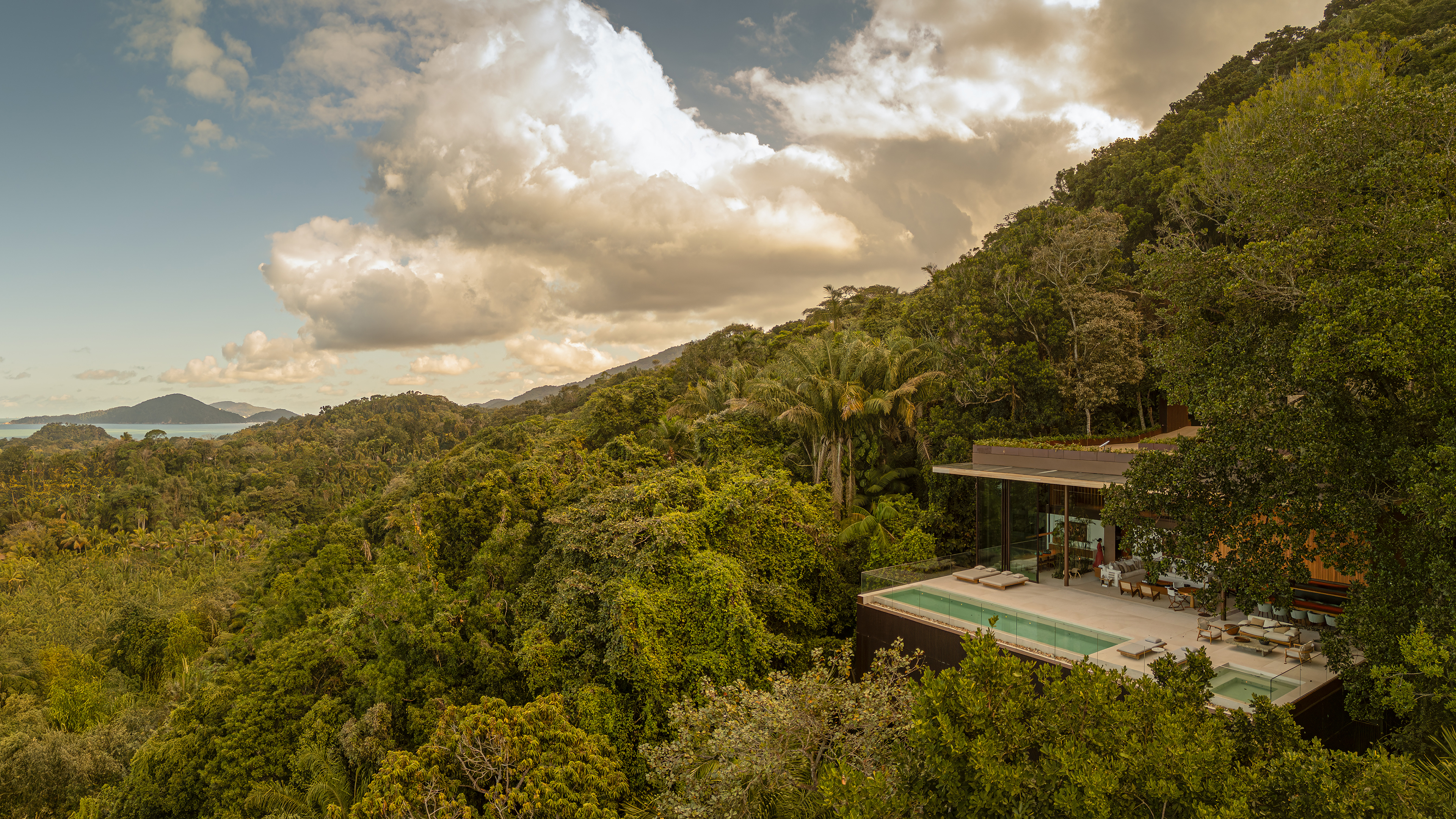
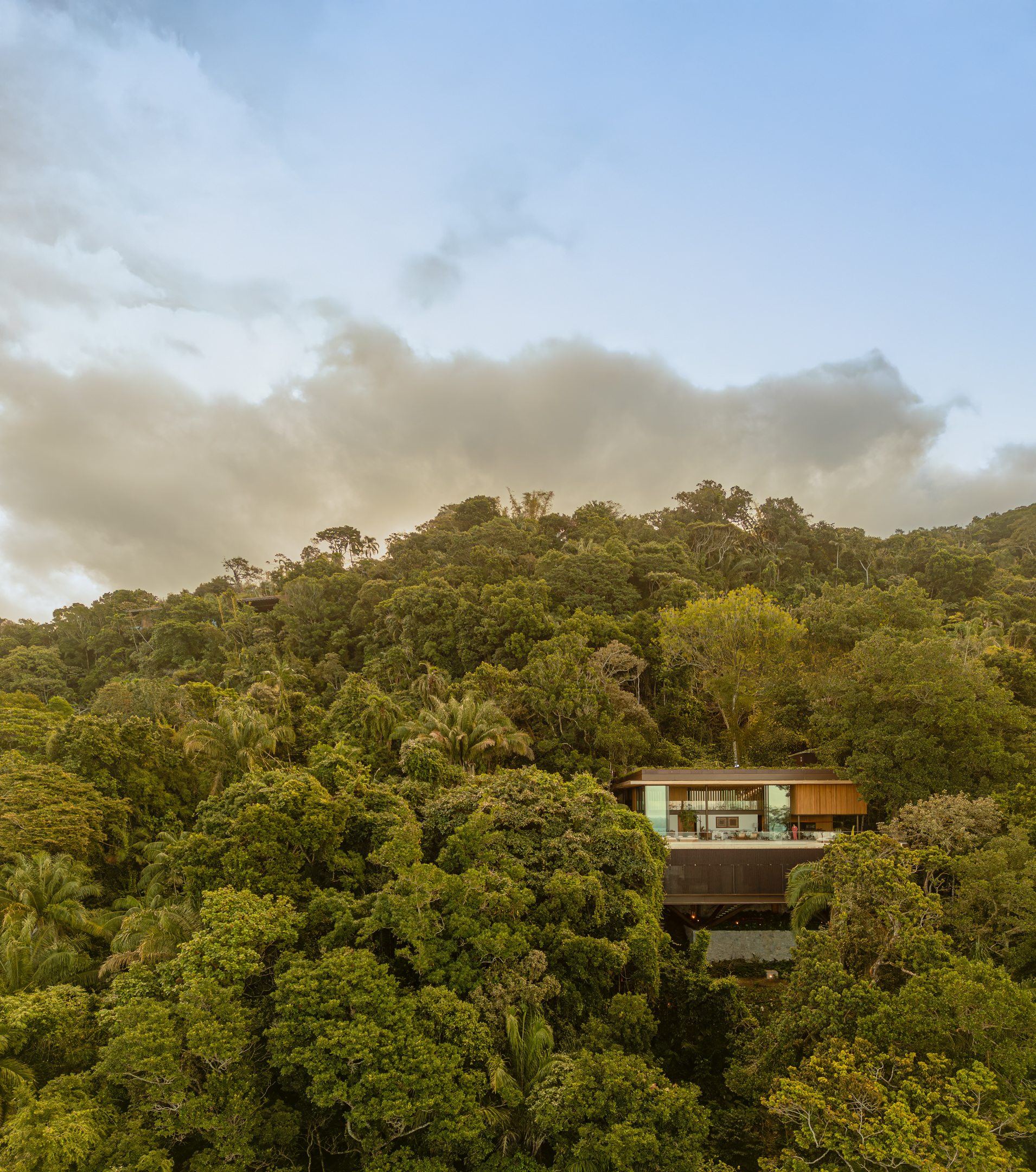
Located in Guarujá, São Paulo, on a steeply sloping plot overlooking the sea and the horizon, the ES House was conceived from a sensitive relationship with the abundant nature surrounding it. The project stems from the clients’ emotional connection to the land and the desire to create an informal, inviting house that is deeply integrated into the landscape.
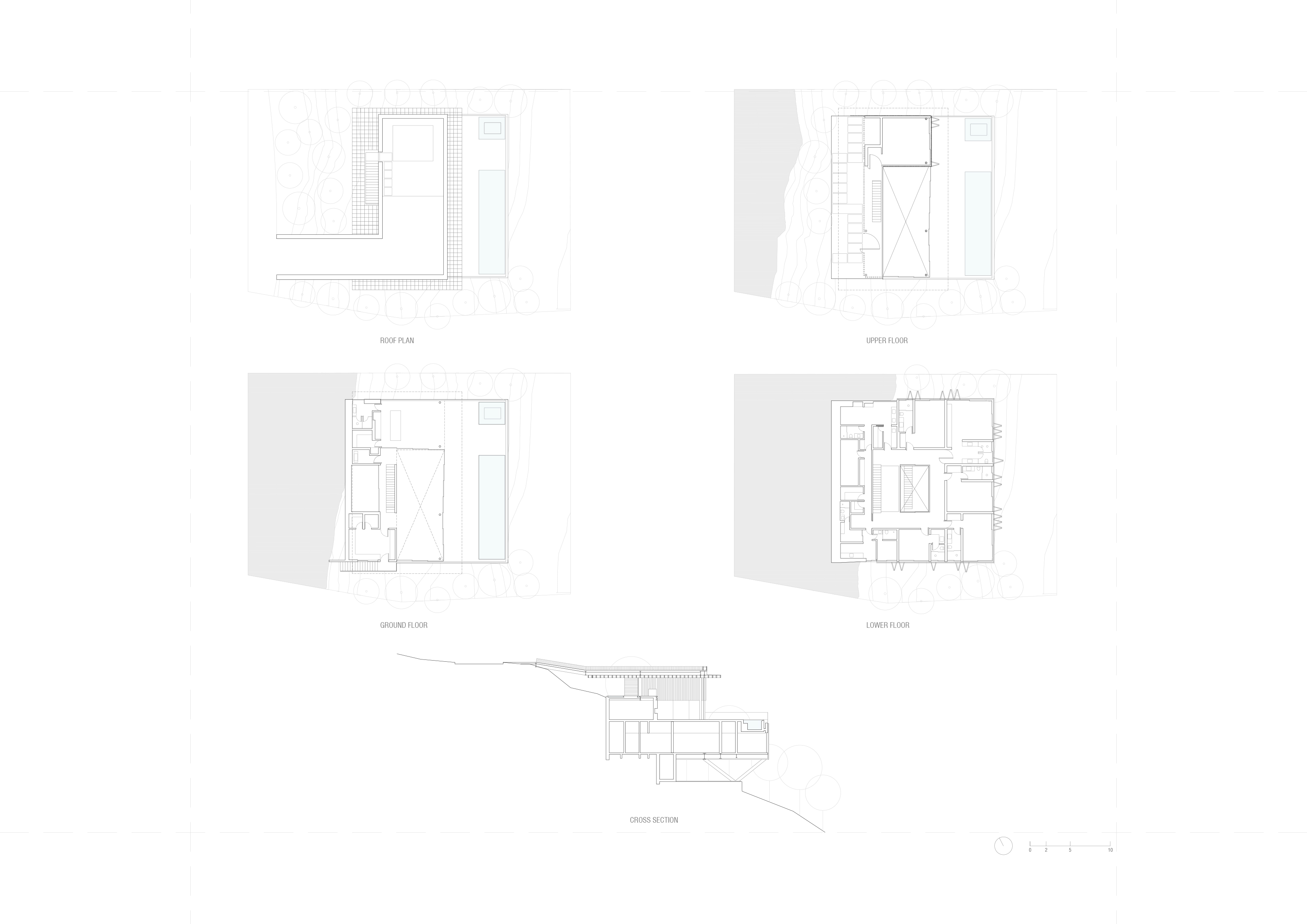
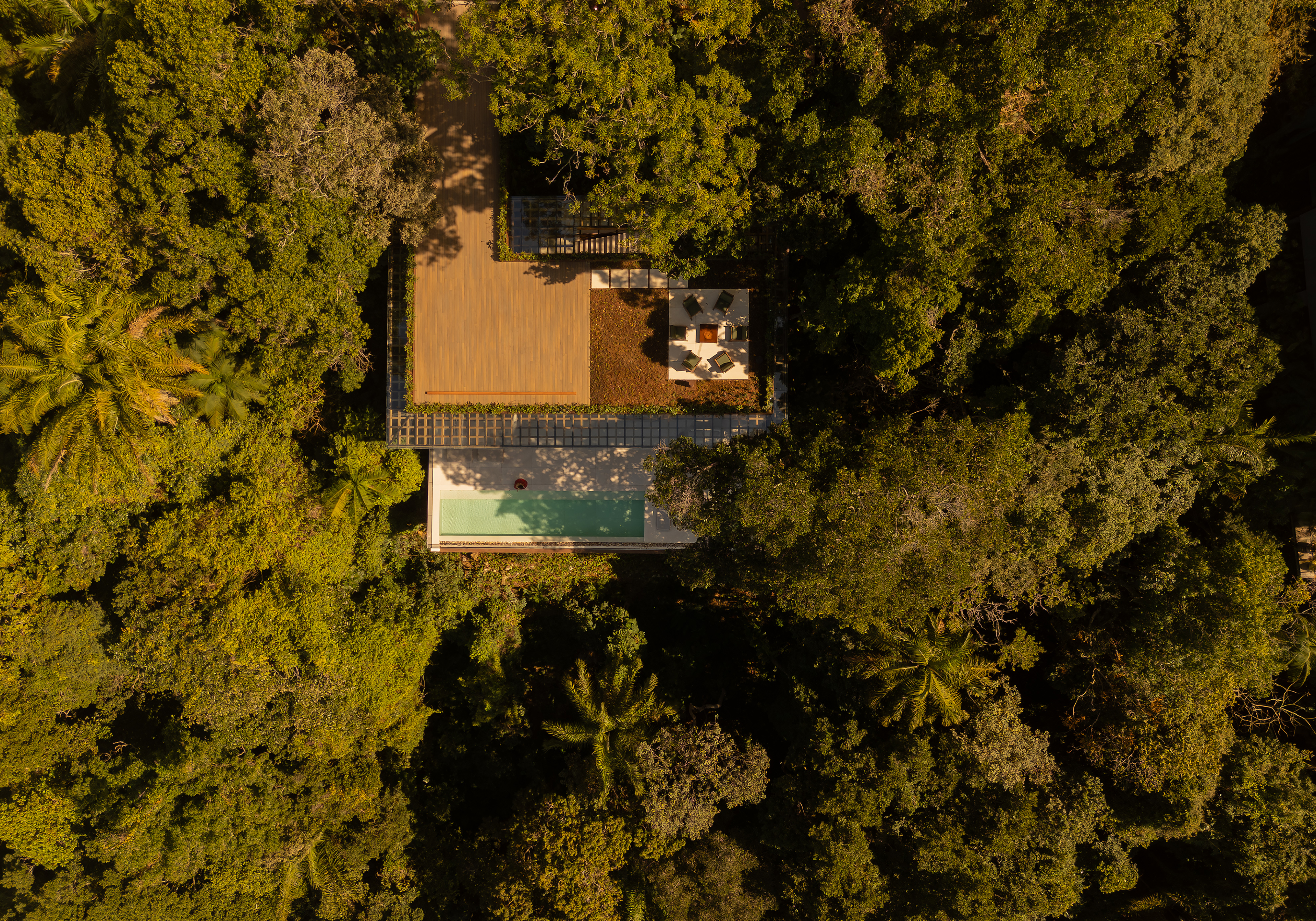
The layout unfolds on different levels, following the pronounced relief and meeting legal and programmatic requirements, as well as the wishes of the young couple. The architecture seeks to blend into the existing forest, minimizing interference and preserving the vegetation as much as possible. To reinforce this intention, new trees were planted, helping to camouflage the house in the landscape.
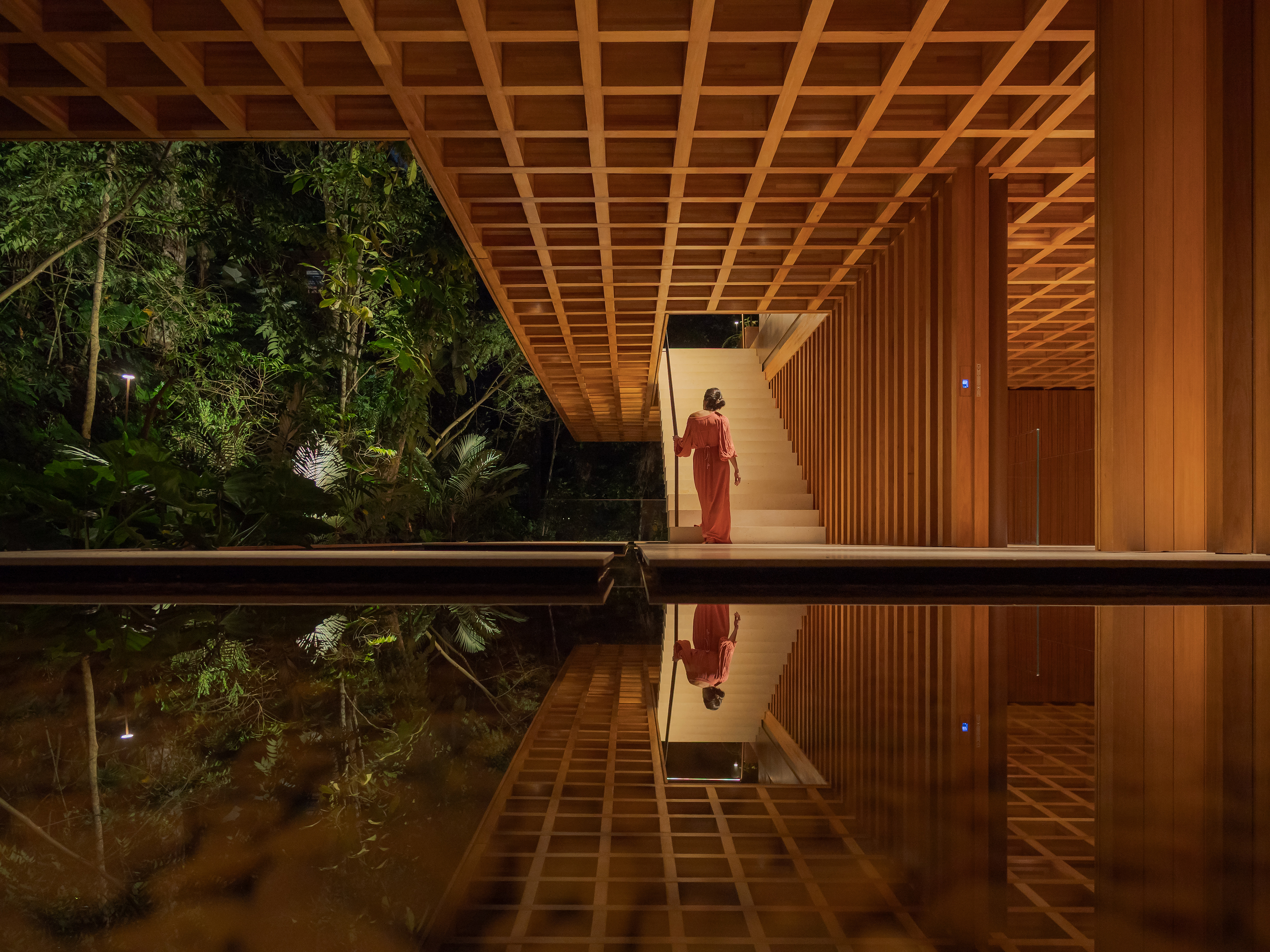
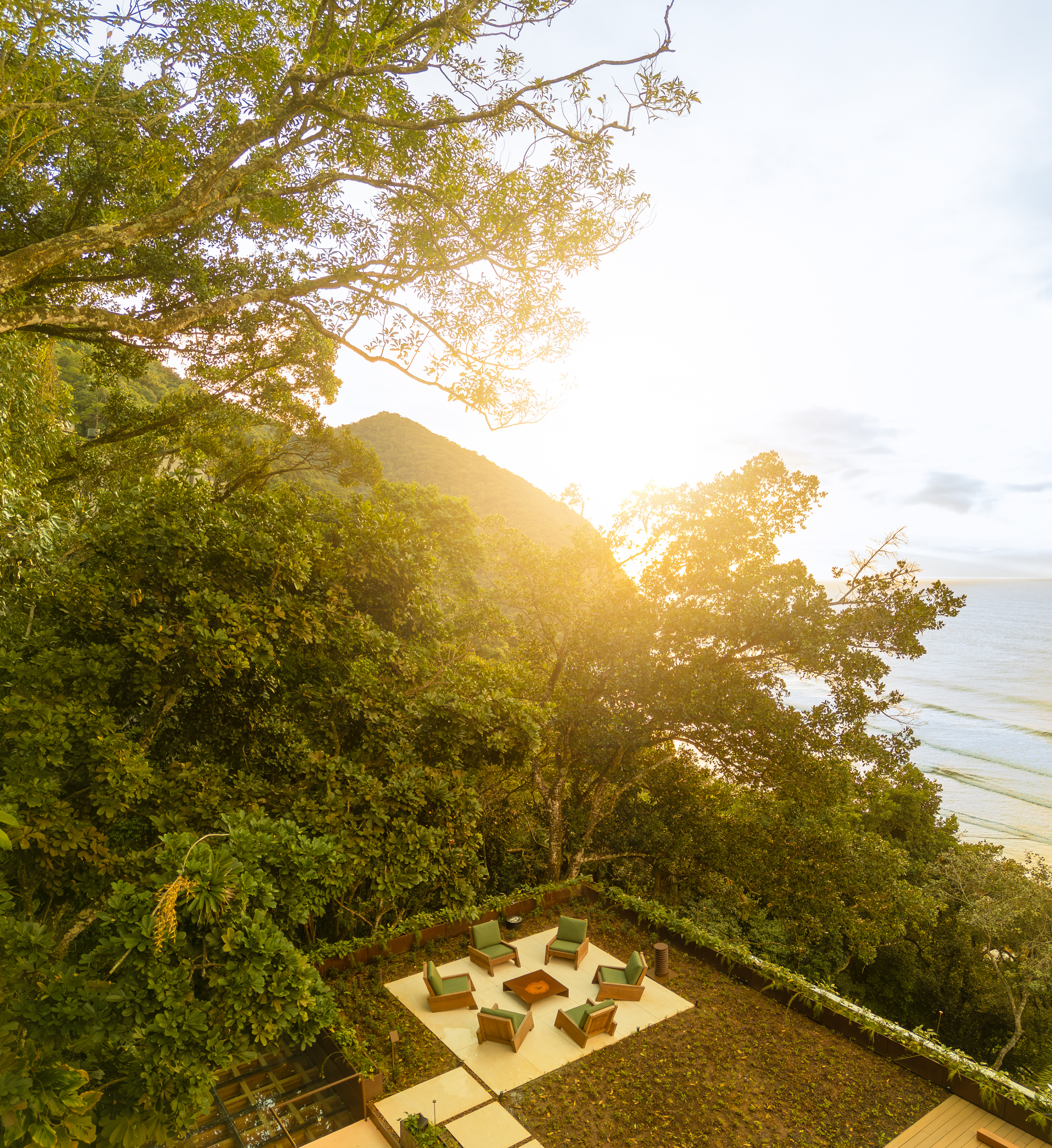
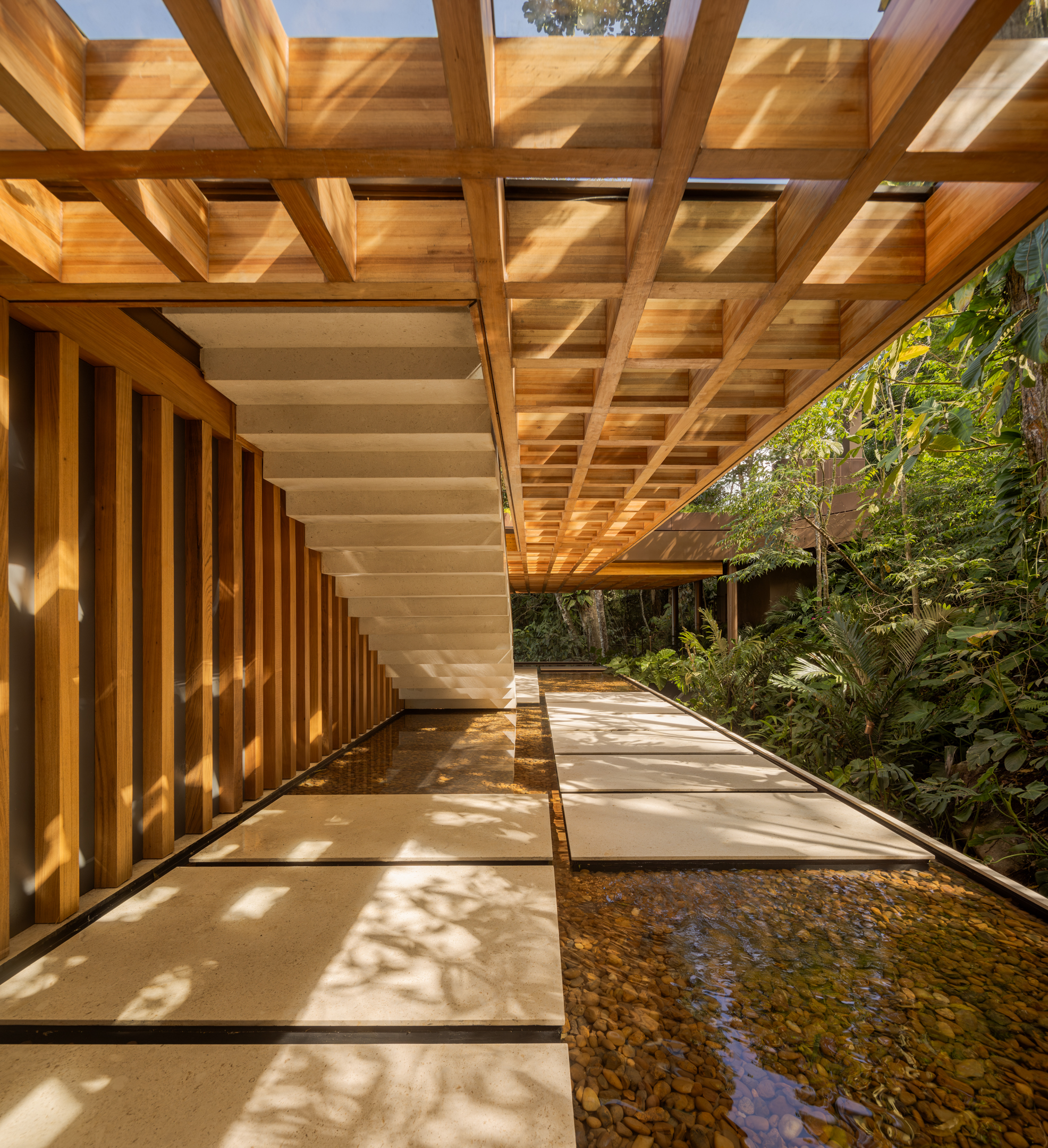
Access is via street level, where the roof welcomes visitors to a garden with a fire pit and a wooden deck. From there, the house gradually reveals itself. The first flight of stairs leads to a garden with a reflecting pool and pebbles, marking the arrival at the double-height mezzanine of the living room. At this level is the Family room, which can remain integrated or isolated through wooden panels, always with the view as the main feature.
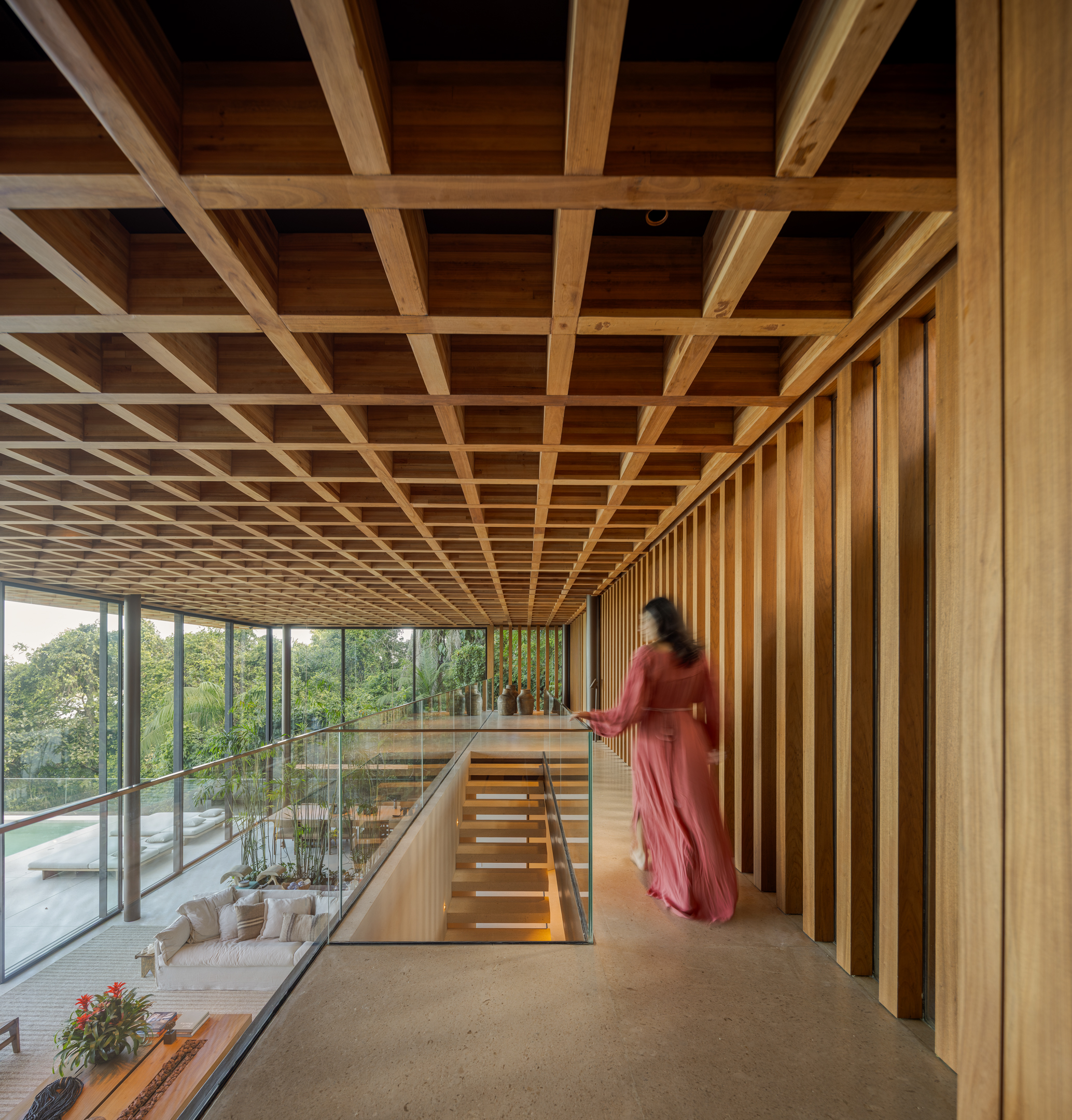
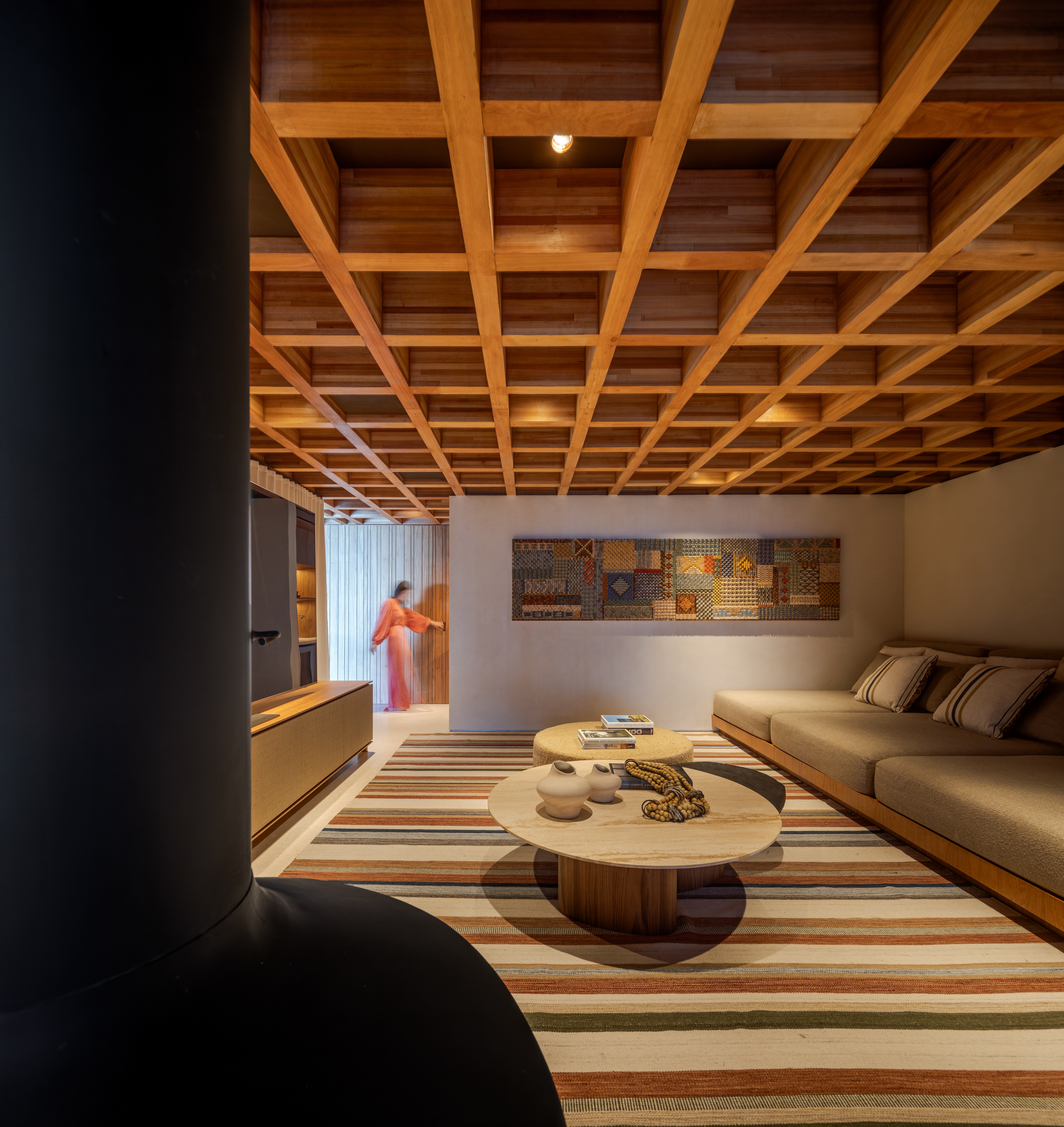
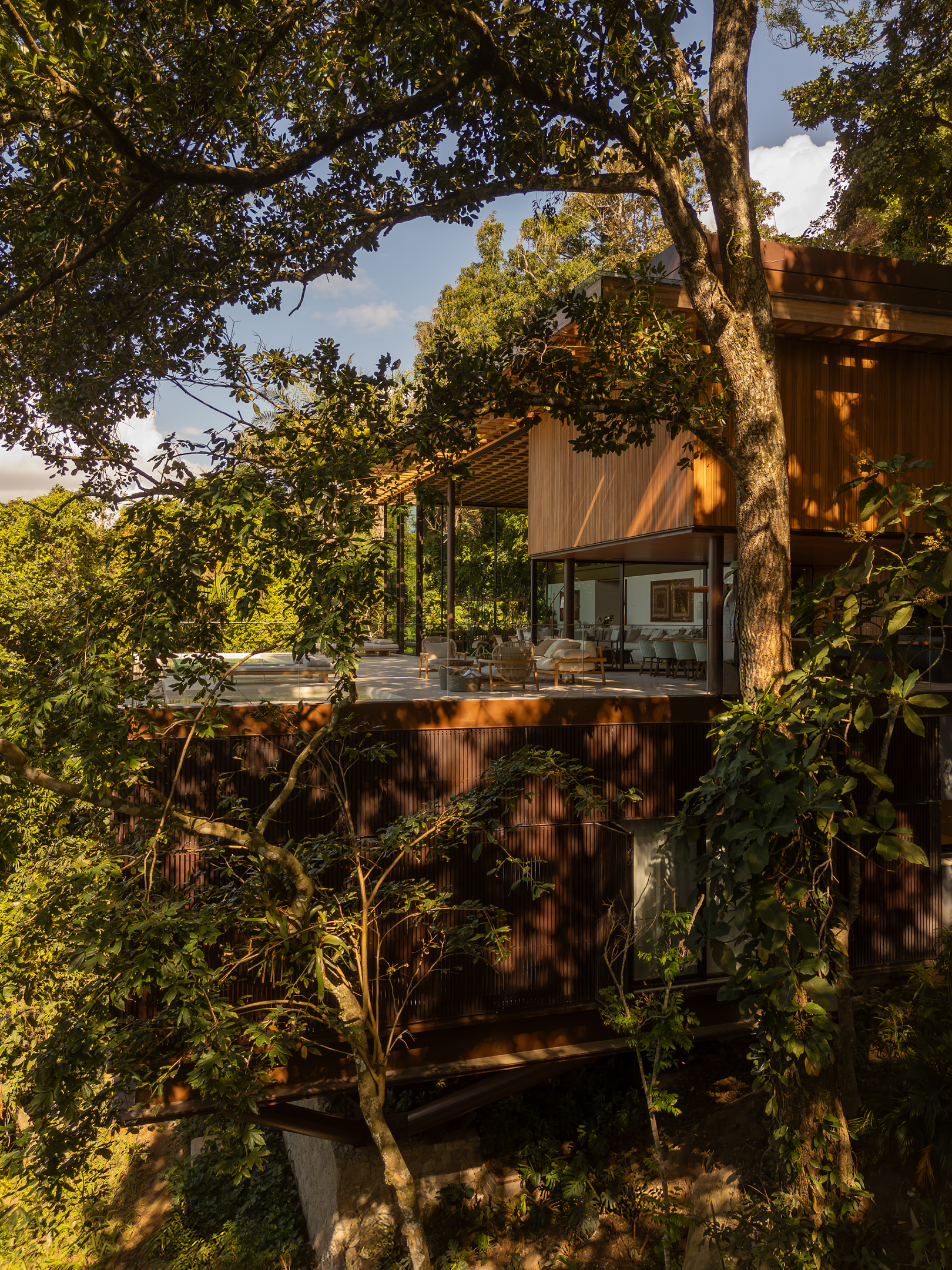
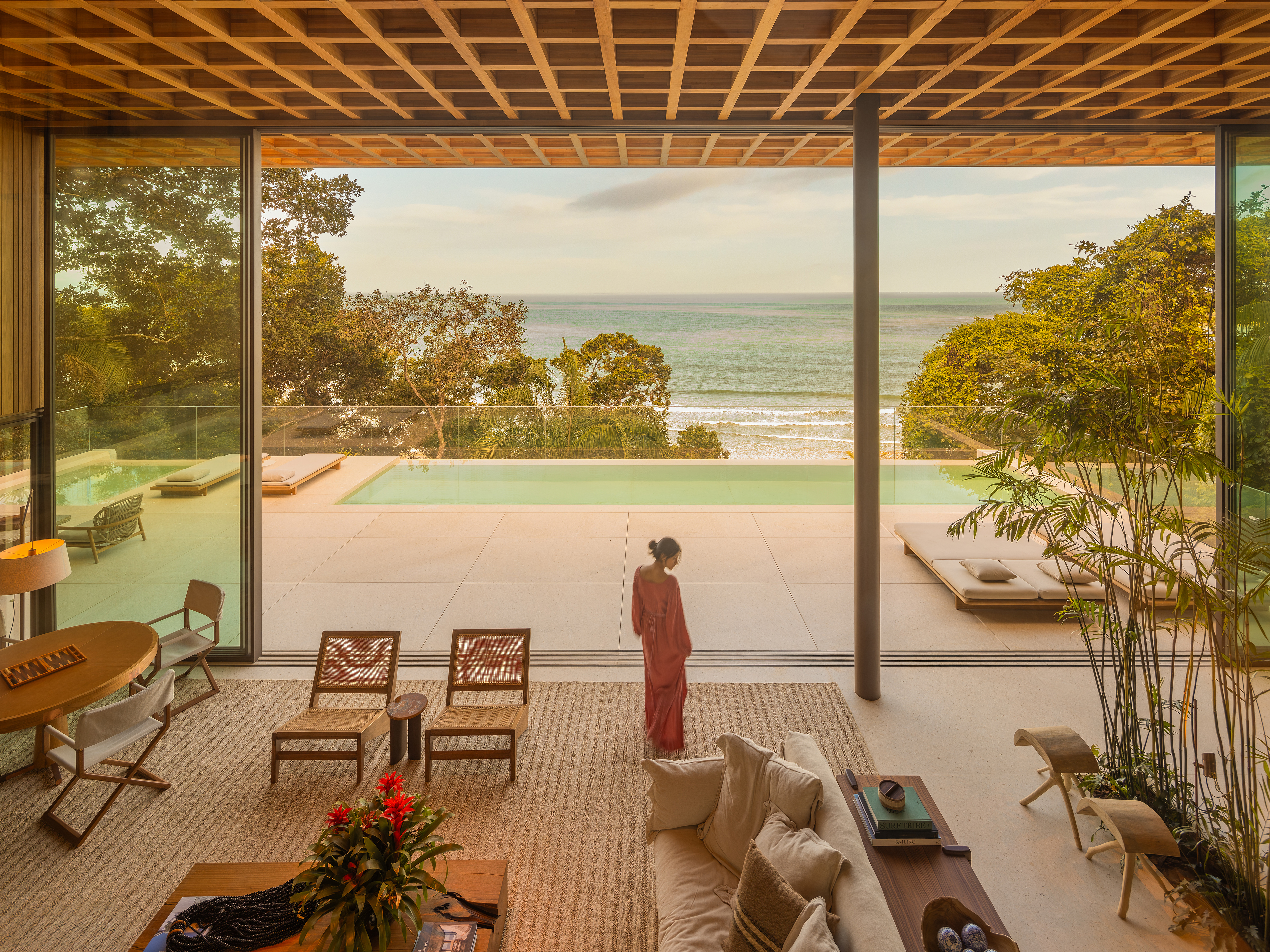
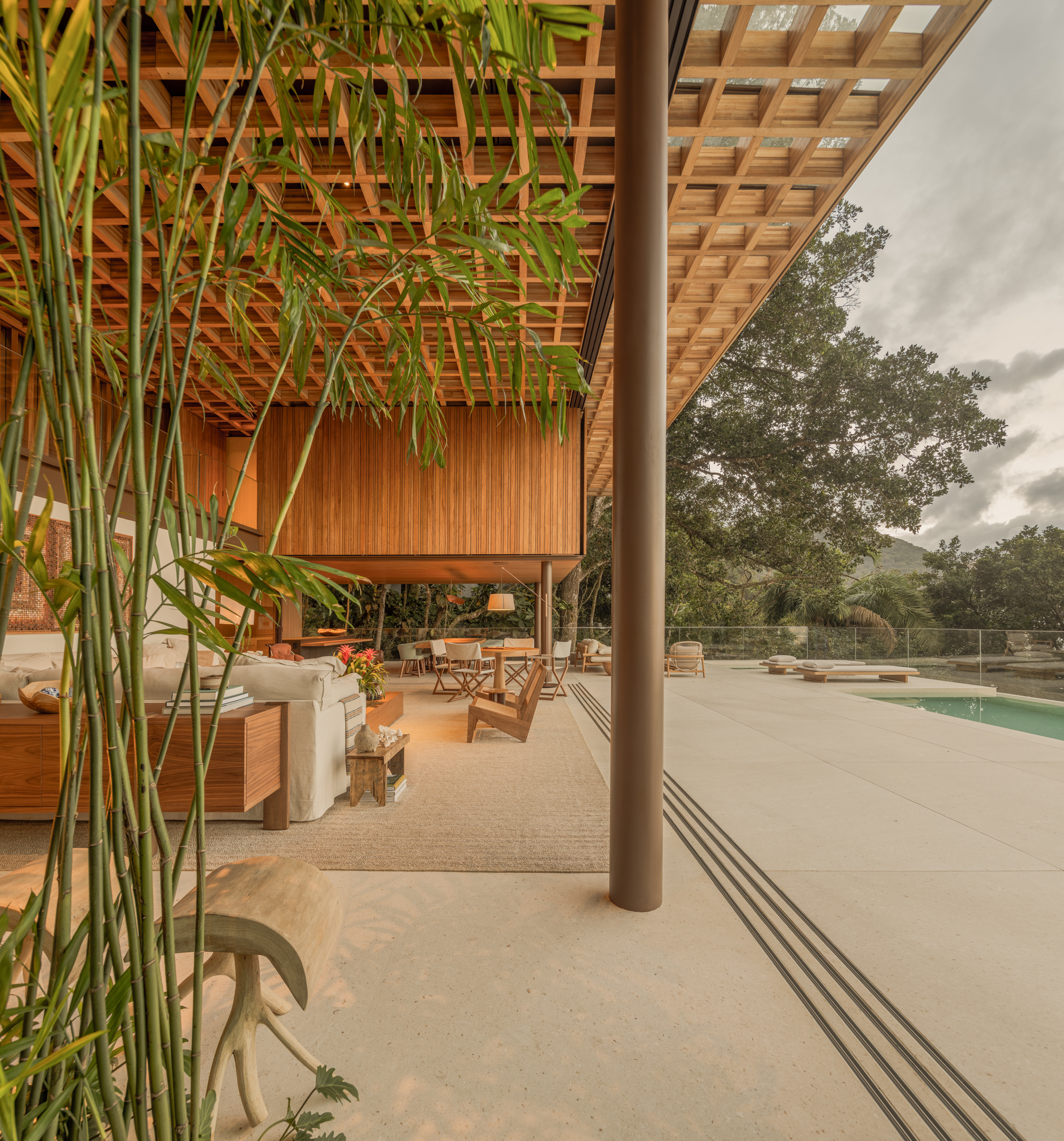
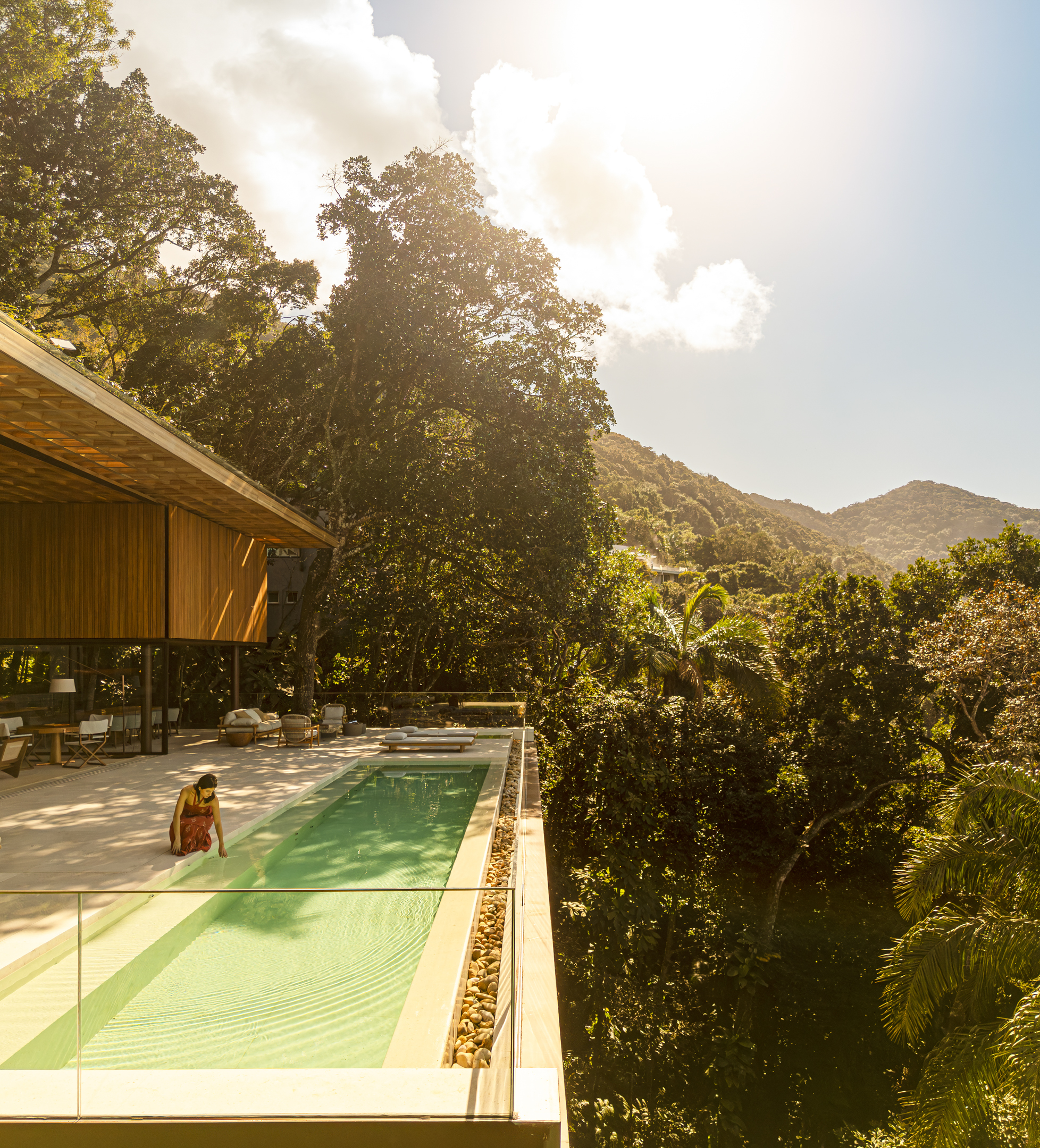
On the level below is located the main social area, consisting of a living room, dining room, and gourmet veranda, organized in a continuous space open to the sea horizon. The double-height ceiling and Glulam roof enhance the feeling of spaciousness, while large glass panels ensure transparency and connection with the landscape. An internal garden acts as a transitional element, separating the living and dining areas and reinforcing the relationship between interior and exterior. The room also opens onto the pool and the surrounding forest, creating a protected and welcoming environment.
The lower floor houses the bedrooms, located at the level of the treetops. Along the circulation areas, in strategically designed places, we have distributed works of art, creating a pleasant circuit with close proximity to the vegetation, reinforcing the atmosphere of refuge and integration with nature.
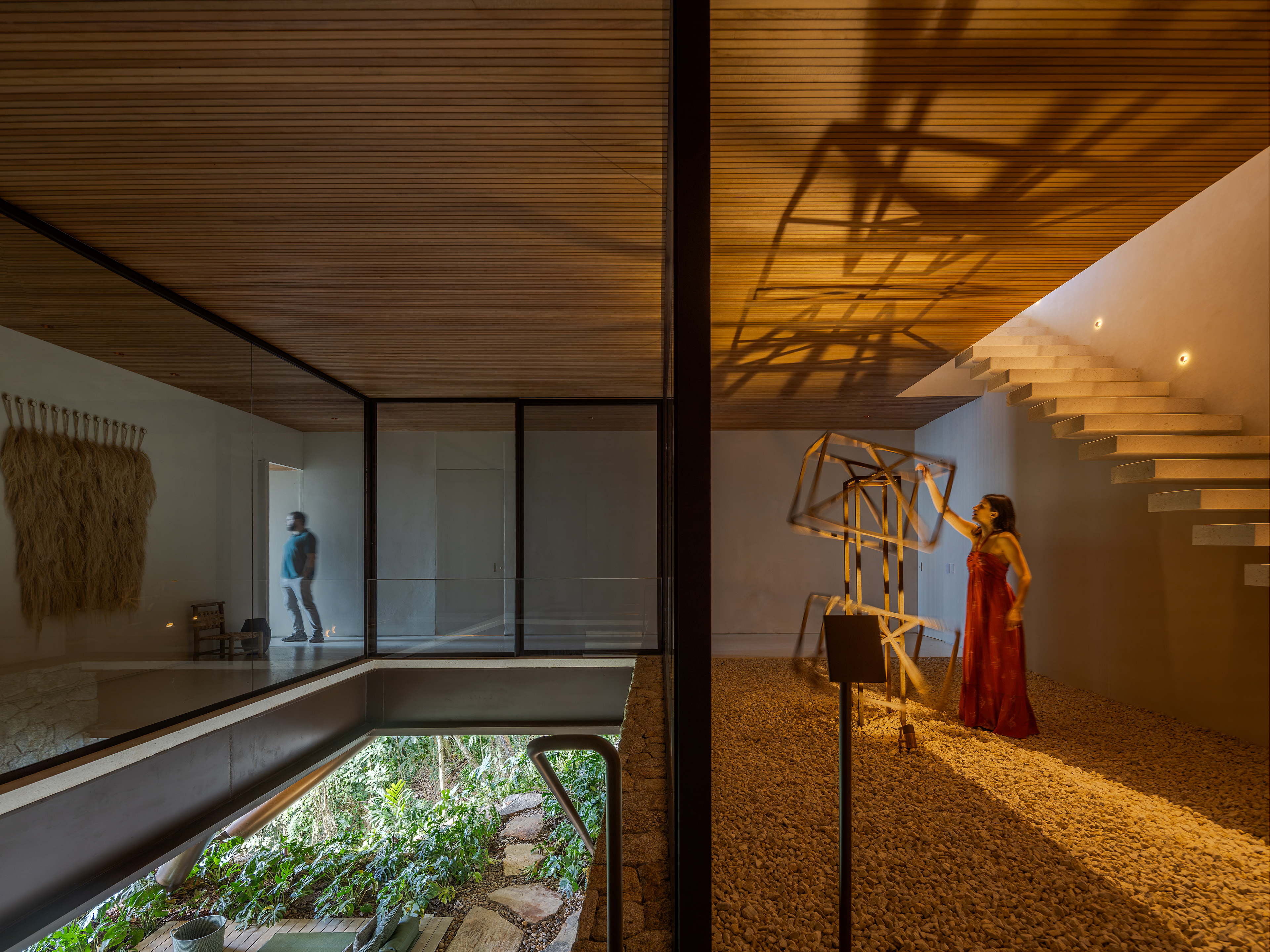
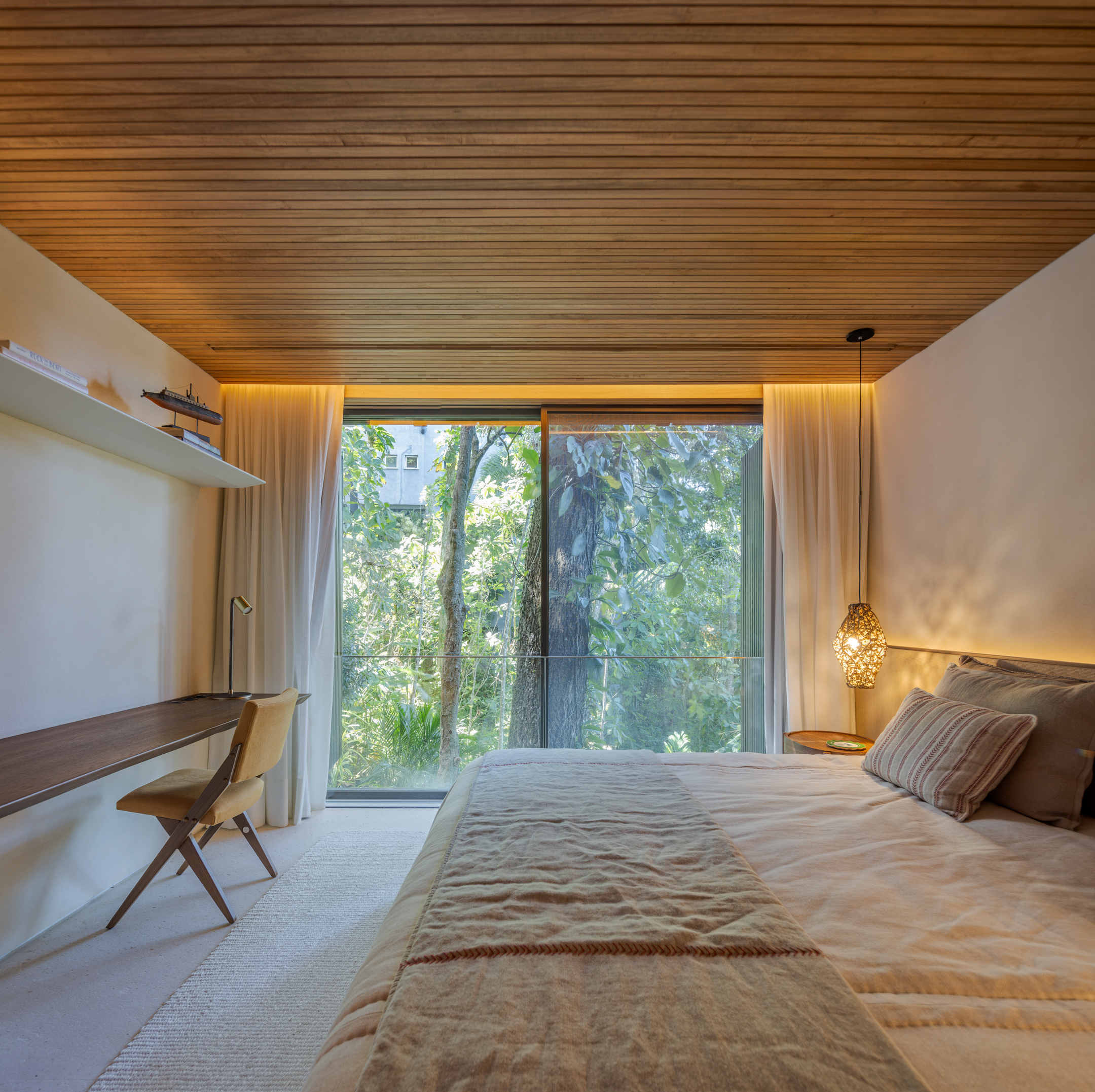
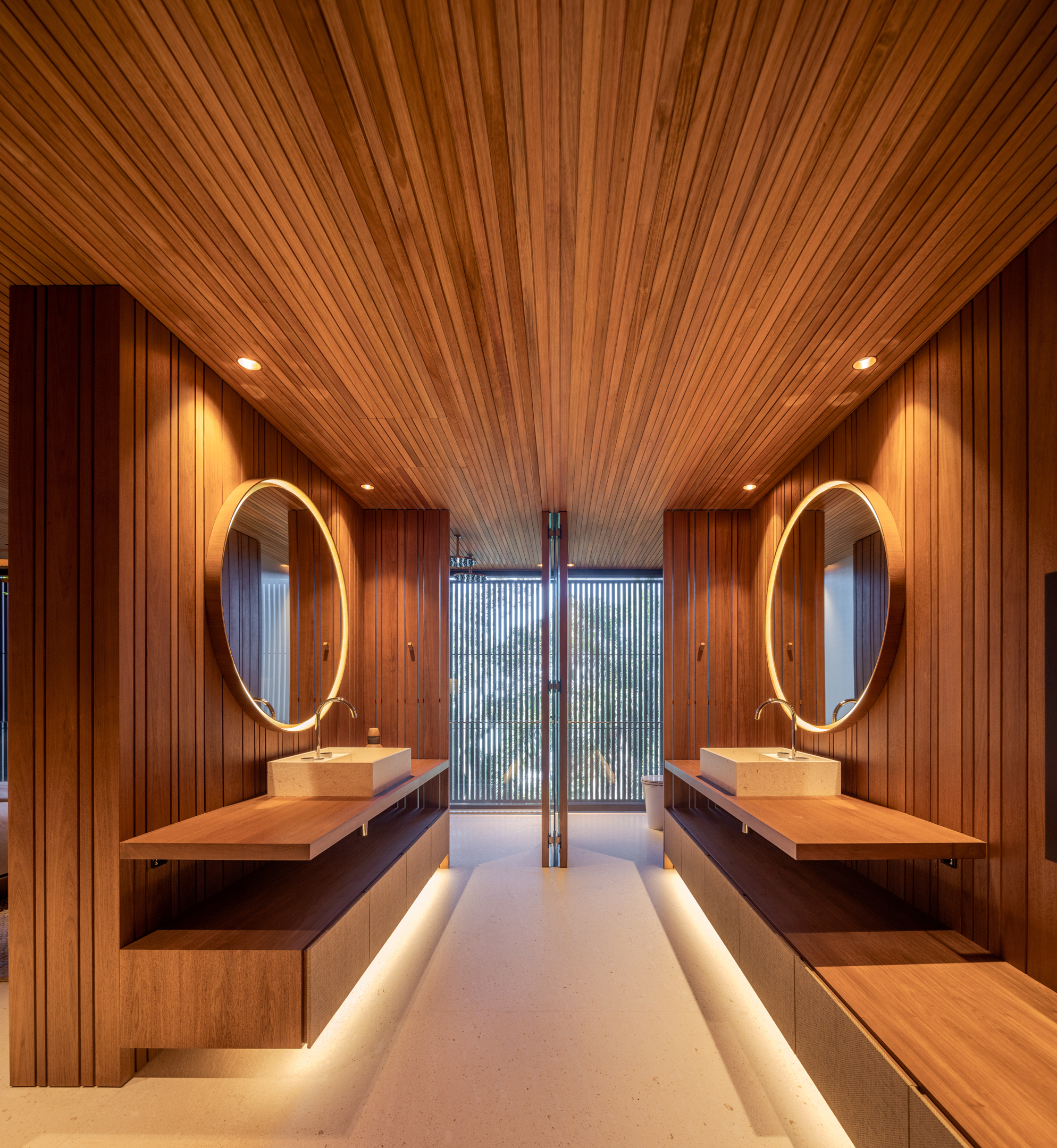
Further down, at deck level, is the area dedicated to contemplation and relaxation, with a sauna, jacuzzi, and spaces for meditation, considered by the clients to be the most special environment in the house. Wooden ceilings and floors, along with the strategic use of stone along the staircase, create a welcoming and quiet atmosphere.
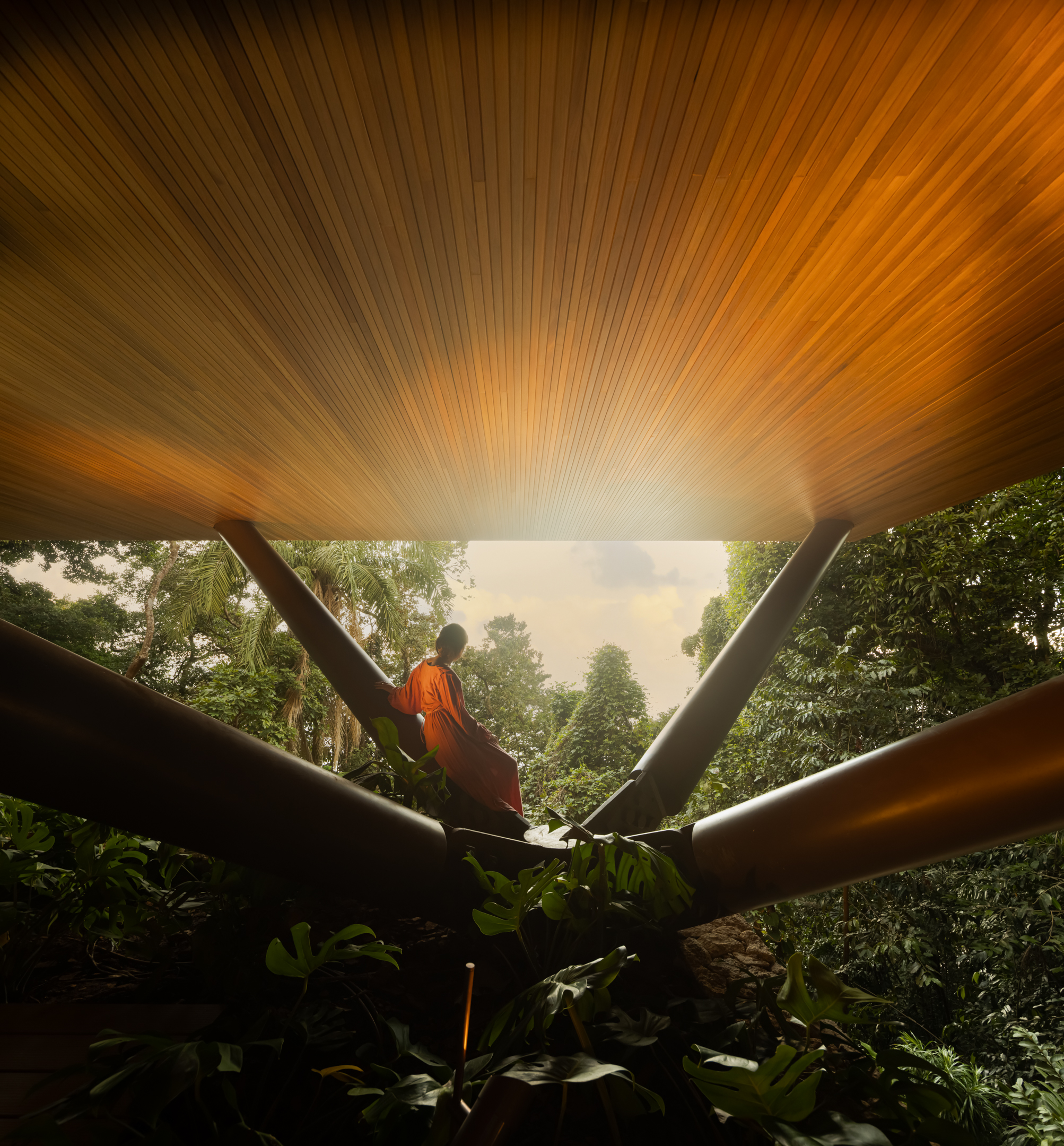
The structural solution was one of the project’s major challenges. The house rests on a dendriform structure, which supports the projection of the main volume at only two points, reducing contact with the ground, interfering as little as possible with the vegetation, and preserving the view of the sea and the horizon. The residence thus appears suspended in the landscape.
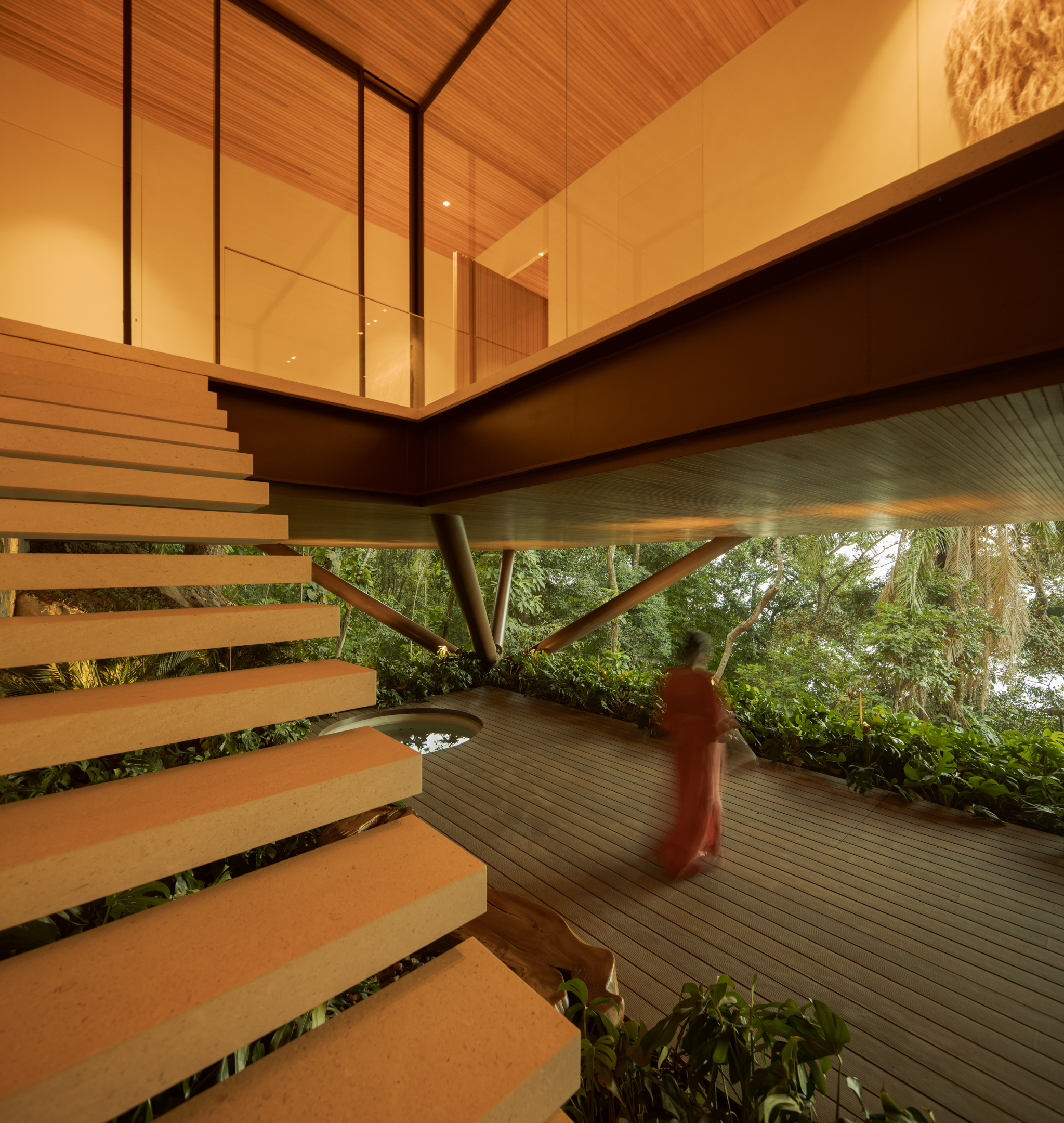
The materials reinforce the unity of the project throughout all levels. Natural materials such as hand-cut stone, freijó wood, and carefully sourced stone floors are repeated, creating visual and tactile continuity. The walls, for the most part, receive warmer and earthier textures and tones, ensuring cohesion and identity to the whole. In the furniture, highlights include pieces by Jean Gillon, Etel Carmona, and Baba Vacaro. In the works of art, carefully chosen in conjunction with the clients, names such as Burle Marx, José Patrício, Marcos Amato, and Raul Mourão are featured.
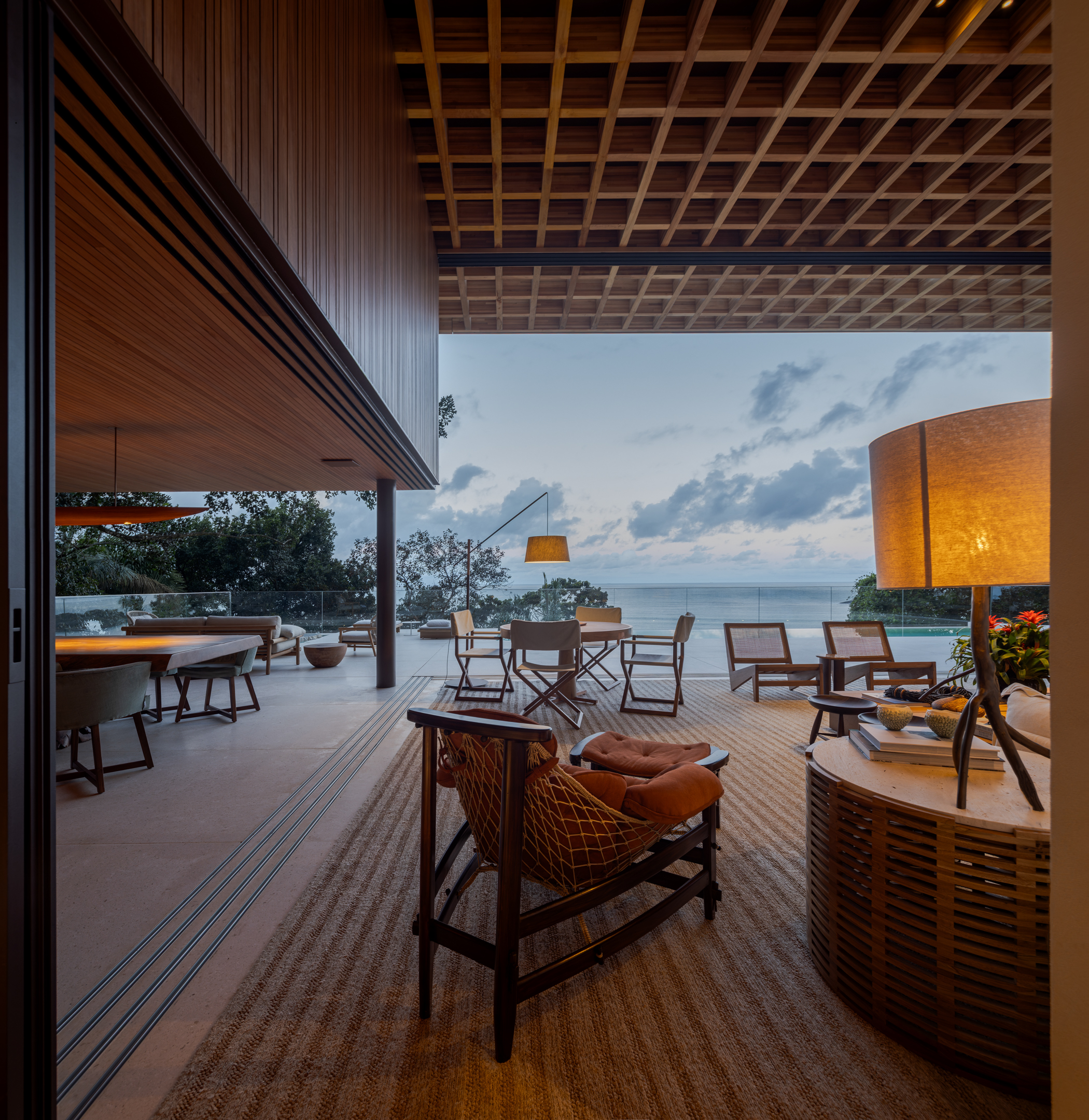
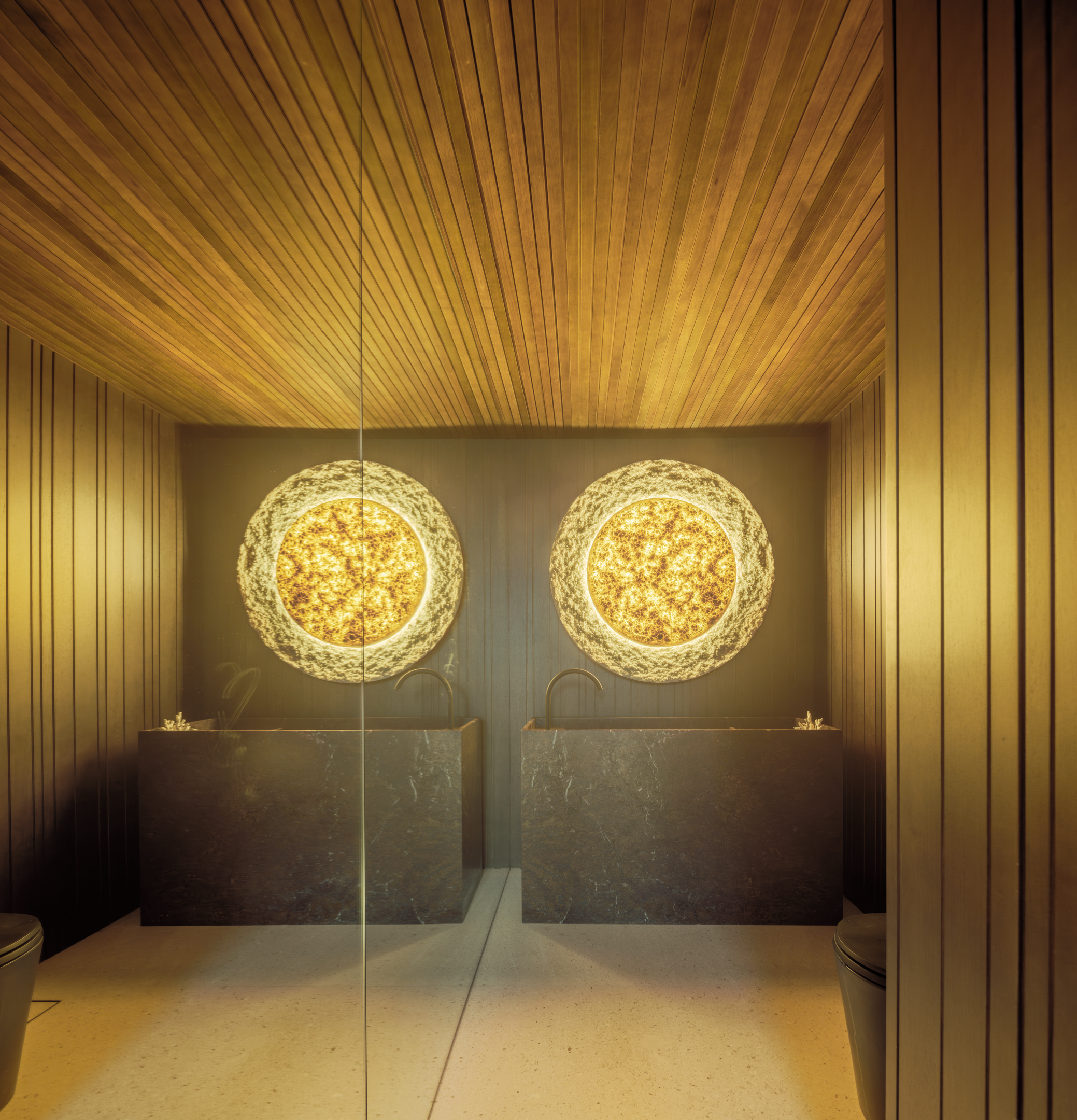
The result of a creative process marked by the freedom granted by the clients and by complex engineering, the ES House presents itself as a light house, integrated with nature and designed for welcoming, socializing and contemplating, always maintaining the view and the landscape as central elements of the project.